Europe’s strongest AI advantage may lie in fields where progress depends on proprietary data and deep scientific expertise. Biology makes the case clearly: even the most capable model cannot learn from information that has never been collected.
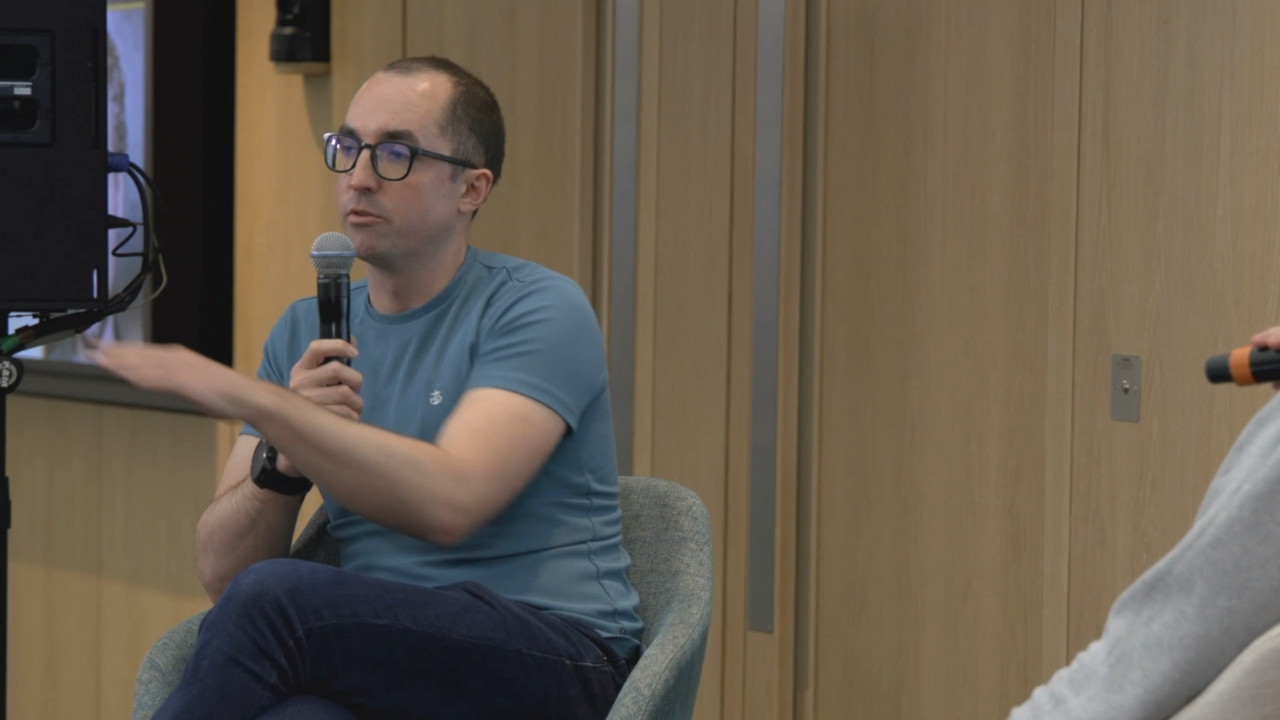
In this conversation, recorded at EUVC Summit 2026, Oliver Vince, Co-Founder of Basecamp Research, joins Lorenzo Cerchi, Venture Capital Investor at Singular, to discuss biological data, AI scaling laws and what Europe needs to build globally significant deep-tech companies.
Biology has a data problem
Large language models became more capable by training on enormous amounts of publicly available text. Biology does not offer the same starting point.
“Far more than 99% of life on Earth, we have no idea what it is, where it is.”
Basecamp Research responded by building its own biological datasets. Its expedition teams collect data from around the world, which the company uses to train its models. Oliver estimates that Basecamp has expanded what is known about life on Earth by between 50 and 100 times, depending on how that increase is measured.
This creates a different kind of AI company. The model matters, but its capabilities depend on a dataset that competitors cannot simply download or reproduce. Basecamp’s premise is that expanding the underlying biological knowledge should produce a corresponding increase in model intelligence.
For investors, the important question is therefore not only whether a company has strong AI talent. It is whether the company controls the inputs required to make its models meaningfully better.
Europe can combine AI with the domain
Oliver argues that Europe and the UK are particularly well placed to build companies where frontier AI meets fields such as quantum computing, fusion, materials science, chemistry and biology.
“A real structural advantage is the combination of AI and the domain.”
Europe has concentrated scientific talent, strong universities and researchers with years of specialist training. Oliver also points to the comparatively lower cost of talent in the UK. The harder task is creating an environment in which those researchers feel able to pursue ideas that could fail, provided the potential outcome is large enough.
Capital must support that ambition. Basecamp has already built large biological datasets and trained models designed to translate disease biology into therapeutic candidates. Continuing along that path requires substantial research investment and a willingness to finance an outcome that may be nonlinear.
Oliver sees a meaningful difference between the US and Europe here. Many US investors have already experienced extremely large venture outcomes, making them more comfortable with uncertainty, long timelines and concentrated risk.
“If you’re playing to win, you’ve gotta play to win and not play to be halfway in the middle.”
A four-question test for ambitious deep tech
Founders and investors can use four questions to assess whether a deep-tech company has a credible right to win:
Does the company control a scarce input? Identify whether its advantage comes from proprietary data, infrastructure or access that competitors cannot easily reproduce.
Are AI and domain expertise genuinely integrated? A strong model team and strong scientists are insufficient if they operate as separate groups.
Is there evidence of a scalable path? Ask what improves as the company adds data and compute, what has already been demonstrated and what remains uncertain.
Does the financing match the ambition? Determine whether the capital plan can support the research, talent and time required to pursue the full outcome.
These questions move the assessment beyond a general claim that a company “uses AI”. They reveal whether its advantage can deepen as the system scales.
From disease biology to generated medicines
Basecamp’s long-term ambition is to build a model that can take disease biology as an input and generate a potential medicine. Oliver believes that moving from “prompt to cure” is technically possible, although the cost, timeframe and route to patient impact remain uncertain. A system may work in a laboratory years before it reaches clinical use.
That gap should shape how founders set milestones and how investors evaluate progress. The next board or investment discussion should test whether each technical milestone makes the nonlinear outcome more achievable, rather than demanding false certainty about when that outcome will arrive.
Listen on Spotify to hear Oliver and Lorenzo trace the path from proprietary biological data to AI-designed medicines, then use the four-question test in your next founder or investment discussion.