Climate hardware reaches scale when buyers, recommenders and manufacturers can rely on the same product again and again.
A breakthrough trapped in bespoke pilots remains an engineering project. Commercial momentum begins when field evidence reduces buyer risk, industry partners want to sell the product and manufacturers can reproduce it reliably.
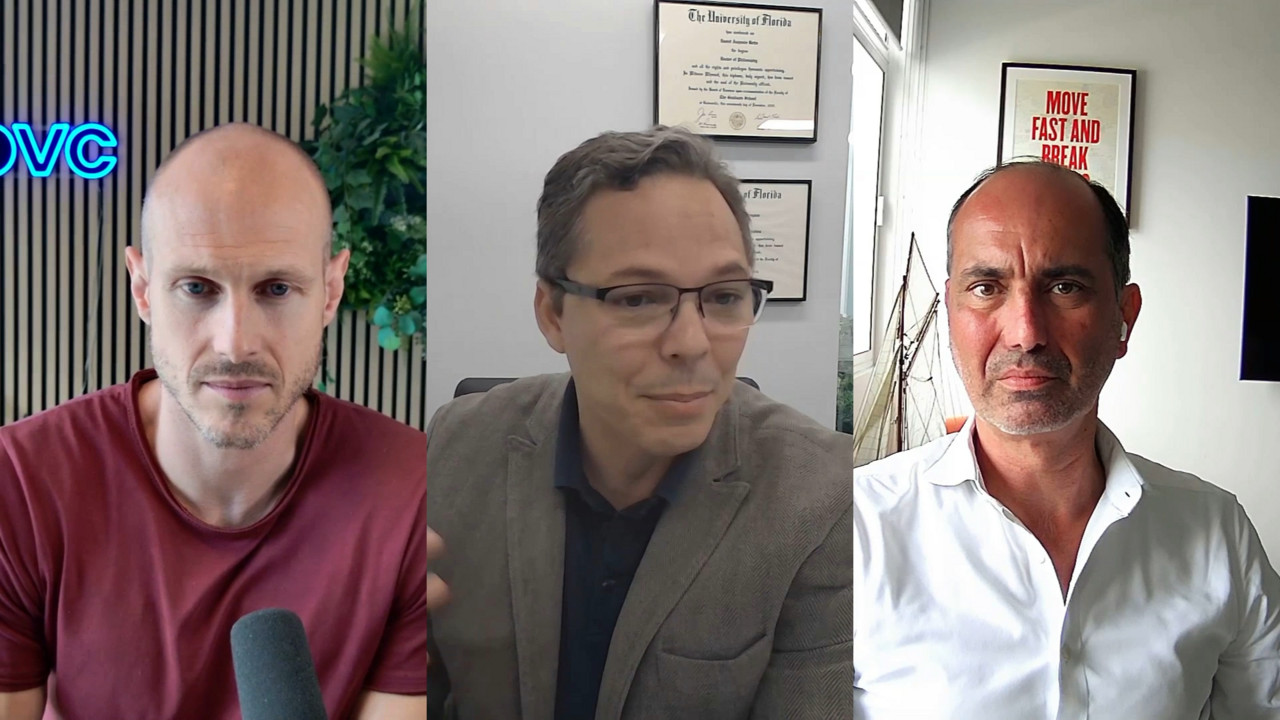
In this EUVC episode, Blue Frontier Co-Founder and CEO Daniel Betts and Executive Chair Christian Hernandez Gallardo explain how the company is making that transition.
Blue Frontier’s air-conditioning technology uses a liquid desiccant to reduce energy consumption by more than 50% while storing cooling energy, allowing buildings to shift when they draw electricity from the grid.
Field performance has to become market confidence
Commercial HVAC buyers rarely choose alone. Sales engineers, contractors and system designers influence which equipment enters a building. Familiar products are easier to recommend because their performance, servicing requirements and failure modes are already understood.
Blue Frontier has therefore treated market education as part of product development. It works with 60 field offices covering around 85% of the US and has trained more than 1,000 sales engineers to sell and deploy its systems.
Training alone cannot remove the perceived risk. Blue Frontier’s pilots have accumulated more than 90,000 hours of field operation. Daniel said the company has deployed 17 field units overall, with 11 operating at the time of recording. That experience includes successful performance as well as problems that could be repaired.
“When things went wrong, they were repairable. When things went right, the customer loved it.”
Those deployments give recommenders evidence they can carry into a customer conversation. They also move the technology into settings where performance matters every day, including a military base, a hospital, a museum and an IMAX theatre.
Christian described the danger facing many hardware companies as “death by a thousand pilots”: repeated validation projects that never become genuine purchasing decisions. The relevant milestone is commercial deployment in buildings where customers expect the product to work without special treatment.
Scaling requires a deliberate end to iteration
Manufacturing introduces a different standard. A prototype can be adjusted between installations. A production design must be built repeatedly at consistent quality and cost.
“In manufacturing there are no small mistakes because they have volume behind them.”
Blue Frontier initially kept pilot manufacturing close to product development, allowing field lessons about reliability and serviceability to feed quickly into the design. Scaling eventually requires that feedback loop to slow down. The team must freeze a production version that is dependable enough to manufacture in volume while development continues on later versions.
Christian’s instruction is deliberately simple:
“Ship what’s on the truck.”
Blue Frontier has also designed its technology around established manufacturing processes. Its non-corrosive liquid desiccant allows the system to use metal heat-exchanger plates and familiar processes such as metal bending and stamping. The company can therefore work with existing manufacturers instead of financing and building its own gigafactory.
That choice transfers production to partners with established supply chains, manufacturing expertise and access to lower-cost capital. It can also create a route into new geographies without reproducing an entire manufacturing operation from scratch.
The pilot-to-scale test
Climate hardware founders and investors can pressure-test commercial readiness with four questions:
Demand: Is the company selling something customers already need and budget for?
Recommendation: Who influences the purchase and what evidence would make them back the new product?
Field readiness: Have deployments demonstrated reliability, repairability and serviceability under real operating conditions?
Replication: Can an established partner manufacture the same version hundreds or thousands of times at the required quality and cost?
Weak answers identify where another pilot may still be useful. Strong answers signal that the company is ready to concentrate on sales, supply and repeatable delivery.
Use the full conversation to pressure-test your route from pilot to production: listen to the EUVC episode on Spotify.
Recording note: This episode was recorded before the public announcement that Christian would step back from his role at 2150 to become Executive Chair of Blue Frontier. He remains an investor across the firm’s funds.


