If you tuned in hoping for crisp conclusions on fund performance, you may have left empty-handed.
But if what you came for was a razor-sharp, high-stakes debate on the mechanics of venture economics—then this was your moment. Fourteen minutes of fierce dialogue at the EUVC Summit, and not a second wasted.
Here’s how it went:
“If you're drawing any conclusions from those data sets... be my friend. But we won't do that.”
Why? Because the data is still messy. Still underpowered. And when you're modeling venture returns—especially for emerging managers—it’s more art than science.
But oh, did we try.
This fast-paced exchange brought clarity to a few of venture’s most misunderstood dynamics:
Why the $20B outcome is the new benchmark for greatness
How fund size maps to percentile outcomes
The hard math behind Seed-to-Series A attrition
Why early-stage investing remains low-probability but high-upside
And the eternal debate: do emerging managers truly outperform, or just dominate a distorted sample?
“If you're really needing data to prove that model, it does not exist.”
We’ll get back to that.
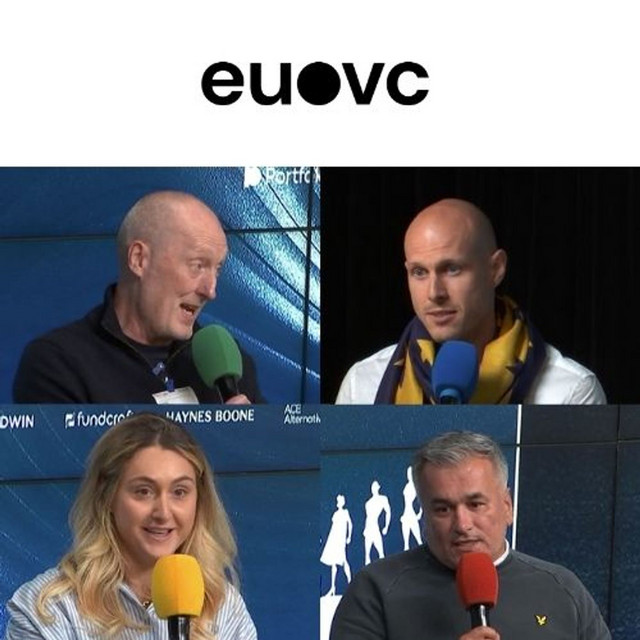
Skin in the game matters
As one panelist cut straight to it:
“You’ve got a $100M fund, a 10% stake, and a $1B exit—that returns your fund. But for the mega-funds? Their targets are so high, they’re borderline unworkable.”
Emerging managers live and die by one or two outliers. But the math only makes sense if you understand fund size dynamics—not just as IRR levers, but as structural constraints.
“We’ve had nearly 60 outcomes that each returned over $1B to a single fund.”
It’s impressive. But here’s the nuance: that data doesn’t show up in PitchBook or Cambridge unless your fund’s north of $100M. Roughly 80% of the funds backed by panelists aren’t even in those datasets.
So what are we arguing about?
The trouble with “top 10” thinking
Packy McCormick’s teardown got referenced more than once. One takeaway:
“70% of the top 10 funds in each vintage were emerging managers.”
But here’s the catch: what if 90% of the funds in that vintage were emerging managers?
“In that case, they’re underperforming.”
Welcome to incidence math, where sample size makes or breaks your conclusion. If the base rate is off, even the best headline stat misleads.
“What do you mean by incidence?”
Classic. Every friendly panel has that one moment when it turns educational. But it's a question that matters. A lot.
It’s not just about returns
One of the sharpest points came quietly:
“LPs invest in seed funds not just for performance. It’s about ecosystem access.”
Translation: relationships are returns. Getting in early with GPs means getting visibility on companies before the Series A hype. That bridge? It’s often more valuable than a single high multiple.
One last swing (and a mic drop)
“If you’re investing in venture for averages, you’re in the wrong room.”
Top funds don’t optimize for median outcomes. They optimize for extreme outliers. And the GPs who can spot those repeatedly at pre-seed and seed? That’s the whole game.
“I was here only to moderate and make sure we didn’t have a full-on fight.”
We barely avoided one. But what we did have was clarity, contention, and the start of a much-needed ongoing conversation.
Watch the episode here or stream it on Spotify or Apple Podcasts—now with chapters for easy navigation.


