Jamil Anakkar, Founder and CEO of Tandy Ventures and Operating CEO of Preventr, Tandy Ventures’ first acquisition, challenges three common assumptions that hold people back from leaving a corporate role to buy a small business.
You do not necessarily need your own money to make the first acquisition. Corporate and professional experience can create significant value in a smaller company. And you do not need prior sector experience to build successfully in an industry.
Jamil started his career as an NHS paramedic before moving into strategy consulting at Accenture and later working with private equity and portfolio companies.
In 2024, he acquired a 30-year-old fire safety manufacturer using the business to fund the acquisition. Two years after leaving corporate life, he says the wider group has grown to around £20 million in revenue and £5 million in EBITDA.
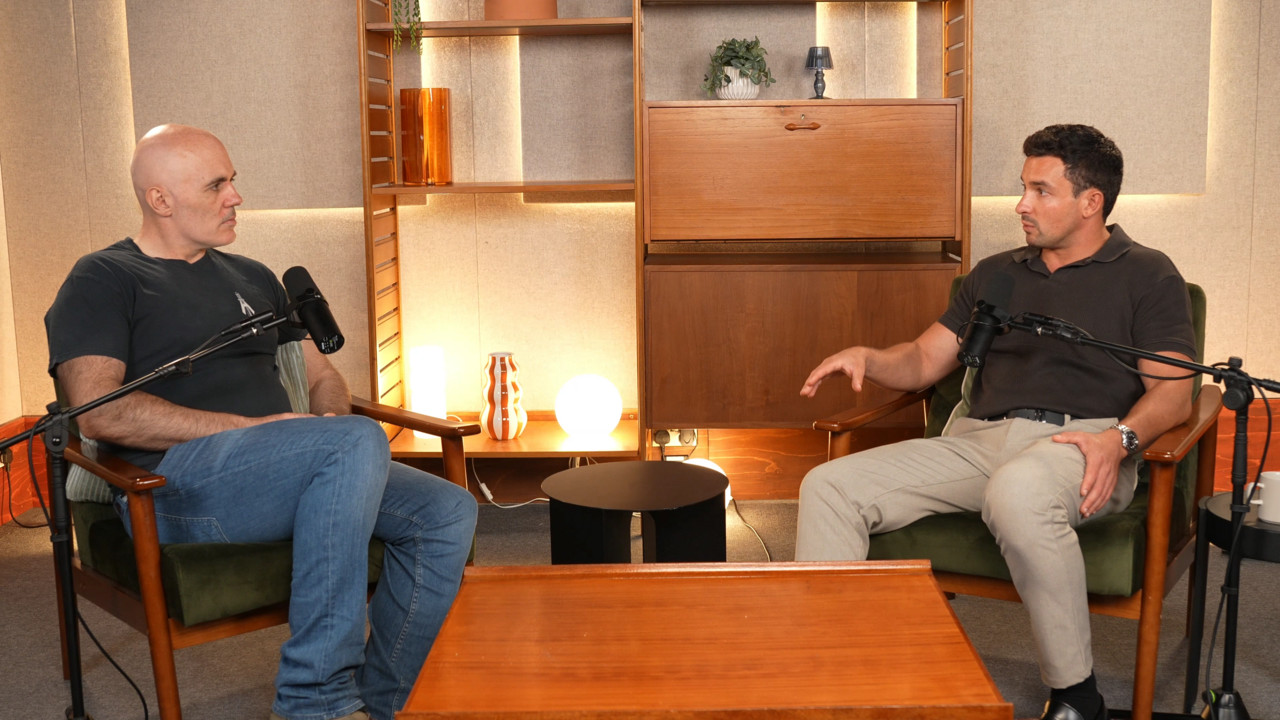
On Unsung, Jamil joined host Will Maunder-Taylor to explain how he made the transition, structured his first acquisition and turned Preventr into the foundation for a broader buy-and-build strategy.
Knowing when to stop preparing
Jamil had wanted to build a business for years. Consulting was partly a way to develop the skills, credibility and exposure he thought he would need before doing it himself.
By his early thirties, though, the trade-off had changed. He had a six-figure salary, generous annual leave and a clear path towards more senior roles, but he no longer wanted the destination.
His conclusion was that there would never be a point where he felt completely prepared.
“You can theorise and study and train and do as much prep as you want, but until you actually get out there and do it, you're never gonna learn.”
So he began looking for industries where an established company could benefit from stronger operations, technology and a more deliberate growth strategy. That search eventually led him to fire safety.
Using the business to fund the acquisition
The first company was a fire door manufacturer in the north of England. It had been operating for around 30 years, was profitable and debt-free, with roughly £4.4 million in revenue and £450,000 to £500,000 in EBITDA. But it had little technology, almost no marketing and limited formal operating infrastructure.
For Jamil, the opportunity was not to rescue a failing company. It was to professionalise a fundamentally good business.
The financing required some creativity. He did not have a huge fund behind him or significant personal capital to deploy, so the negotiation started with the seller’s priorities: a reasonable price, confidence that the deal would complete and some participation in the company’s future upside.
They agreed that 50% of the purchase price would be paid on completion, the remaining balance over five years and the seller would retain 15% of the business.
The completion funds came from cash already held inside the company, while future cash flow supported the deferred consideration. That allowed Jamil to complete his first acquisition using the business to fund the acquisition.
It was not risk-free. Before completion, Jamil spent two months out of work wondering whether the transaction would close at all and whether he might have to return to the City looking for another job.
What happens after you buy the business
Once the deal closed, the abstract idea of business ownership disappeared quickly.
Jamil inherited a team of around 35 people and initially became deeply involved in the day-to-day operation. He describes feeling the weight of making decisions that affected people who had worked in the company for 14 or 15 years.
Some of the first improvements were basic rather than glamorous. He went line by line through the P&L, changed utility providers, reviewed suppliers and renegotiated costs.
According to Jamil, the company moved from around £4.4 million in revenue and roughly £400,000 in EBITDA to £5.5 million in revenue and £1.5 million in EBITDA by the end of the year. That performance helped unlock a £10 million financing facility for further acquisitions.
The broader lesson is that skills that feel ordinary inside a large organisation can be unusually valuable in a small business. Procurement, financial discipline, technology, operating systems and strategic planning can materially change a company that has spent decades focused primarily on doing its core job well.
The corporate comfort problem
Jamil is careful not to present entrepreneurship as the obvious choice for everyone. He describes it as intensely competitive and requiring a high tolerance for uncertainty.
But he also thinks many professionals never seriously consider business ownership because their existing careers are comfortable enough.
His phrase for it is simple: “What you don't hate, you tolerate.”
Today, Preventr has expanded beyond its original manufacturing business into a broader fire safety platform. Jamil says the group has reached around £20 million in revenue and £5 million in EBITDA, while Tandy Ventures is intended to take the buy-and-build approach into other industries.
His first acquisition is striking because of how it was financed. But the more useful lesson is what followed: finding a solid business, understanding what its previous owners had built and applying a different set of capabilities to take it further.
For more on entrepreneurship through acquisition, small business ownership and Unsung events, subscribe to the Unsung newsletter.


