A credible CVC needs an operating model that makes the hard no easier.
Haufe Group Ventures shows what that looks like in practice: its focused mandate, lean governance and evergreen balance-sheet structure help the team avoid deals that would distort its portfolio, even when strong teams, inflated valuations and FOMO make saying yes tempting.
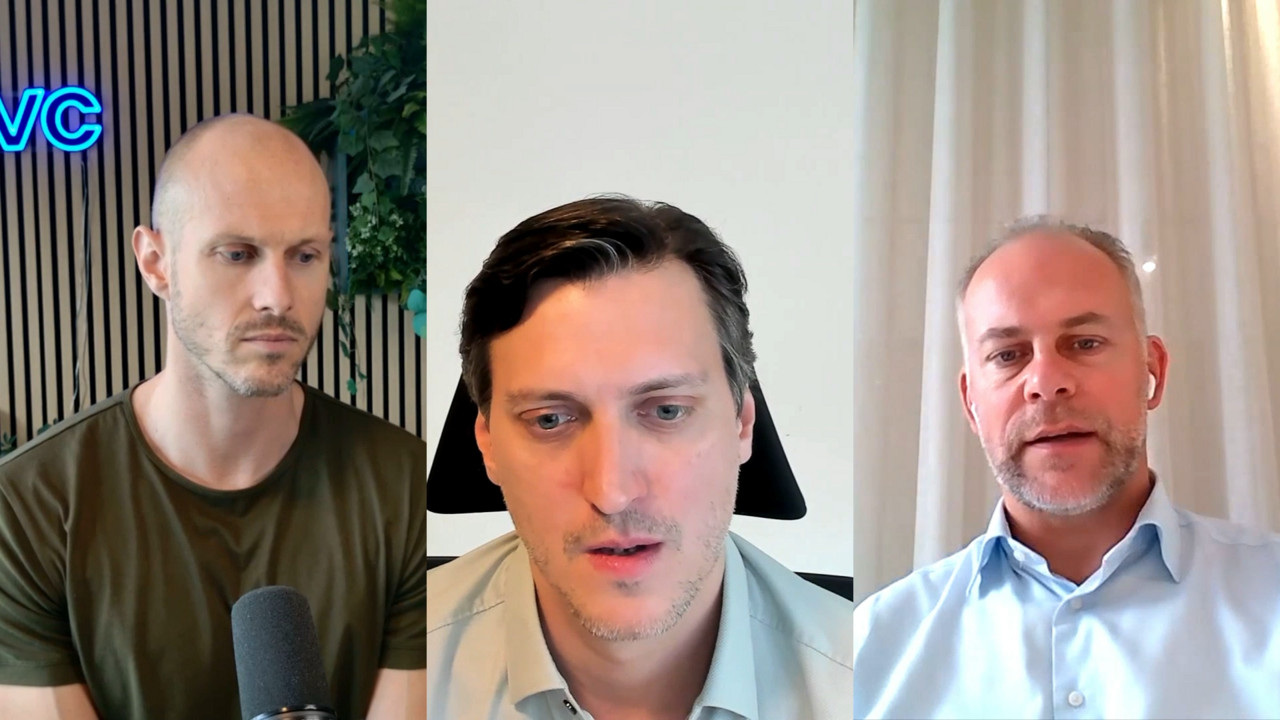
In this EUVC episode, Jasper Roll, Managing Director at Haufe Group Ventures, explains how the family-owned German software company built its venture arm without a traditional fund.
Its model combines direct investments, venture building and LP investing, offering a practical example of how corporates can build credibility through a structure they can sustain.
Start with the model, not the announcement
Haufe Group Ventures deliberately began small. Jasper spent much of the first year working alone, developing the strategy, studying other corporate venture units and determining which model would work for Haufe Group. The team expanded only after establishing that foundation.
Today, three investment professionals have completed more than 20 deals, including follow-on rounds, across 14 portfolio companies. The team invests primarily at pre-seed and seed, sometimes leading and sometimes participating as a strategic investor with relevant expertise.
That pace depends on lean governance. Investment decisions are made by a compact investment committee comprising Jasper, Haufe Group’s CEO and its CFO. This gives the team the speed required for early-stage deals while preserving disciplined decision-making.
“Saying no is far harder than saying yes to an investment.”
The evergreen structure also creates useful constraints. Haufe Group Ventures has defined the portfolio it wants to build and avoids highly priced rounds that would disrupt that construction. When heavily publicised deals create FOMO, the model reduces the temptation: if a deal does not fit, the team does not pursue it.
Conviction must precede capital
A few opportunistic investments do not create a credible CVC. Jasper argues that corporates should first determine which venture lever serves their goals: building, investing, partnering or a deliberate combination.
They then need the mandate, budget and time to follow through. Haufe Group Ventures plans to build a diversified portfolio of roughly 20 to 25 companies. A corporate unwilling to fund that portfolio, accept failures and wait for returns should reconsider entering venture investing.
“You need that strategy and you need that commitment before you can actually start.”
Expectation management begins immediately. Jasper regularly explains the mechanics of venture to internal stakeholders, including the likelihood that many investments will fail before successful exits arrive.
Haufe Group Ventures does not expect meaningful CVC returns immediately. Jasper indicated that they may begin around years six or seven.
Three activities create one learning system
Haufe Group Ventures’ three activities reinforce one another.
Direct investing exposes the team to market shifts, new business models and external founders. The venture studio tests ideas and go-to-market assumptions quickly. LP investing adds specialist expertise, deal flow and another signal that the CVC intends to remain active.
Haufe Group’s employees provide a further layer of sector knowledge that can support portfolio companies. At the same time, the external market helps the corporate identify developments that could affect its customers and future business units.
As Jasper puts it:
“Innovation is not gonna happen within your own four walls anymore.”
A practical test before launching a CVC
Corporate leaders should be able to answer five questions:
Which strategic problem will venturing help us address?
Is investing, building, partnering or a combination the right mechanism?
Can we finance a diversified portfolio, rather than one or two experiments?
Will our governance support the speed required for early-stage decisions?
Are senior stakeholders prepared for failures and a six-to-seven-year return horizon?
Vague answers signal that the mandate needs more work. Specific answers provide the foundation for a venture model that founders, co-investors and internal stakeholders can trust.
Listen to the full episode on Spotify to assess which corporate venturing model your organisation can support with real conviction.