Cheap generation alone will not make energy cheap. Electricity carries a second burden: a transaction layer where multiple intermediaries add cost between those producing energy and those buying it.
Fixing that layer could influence which companies and countries remain competitive as AI, data centres and manufacturing consume more power.
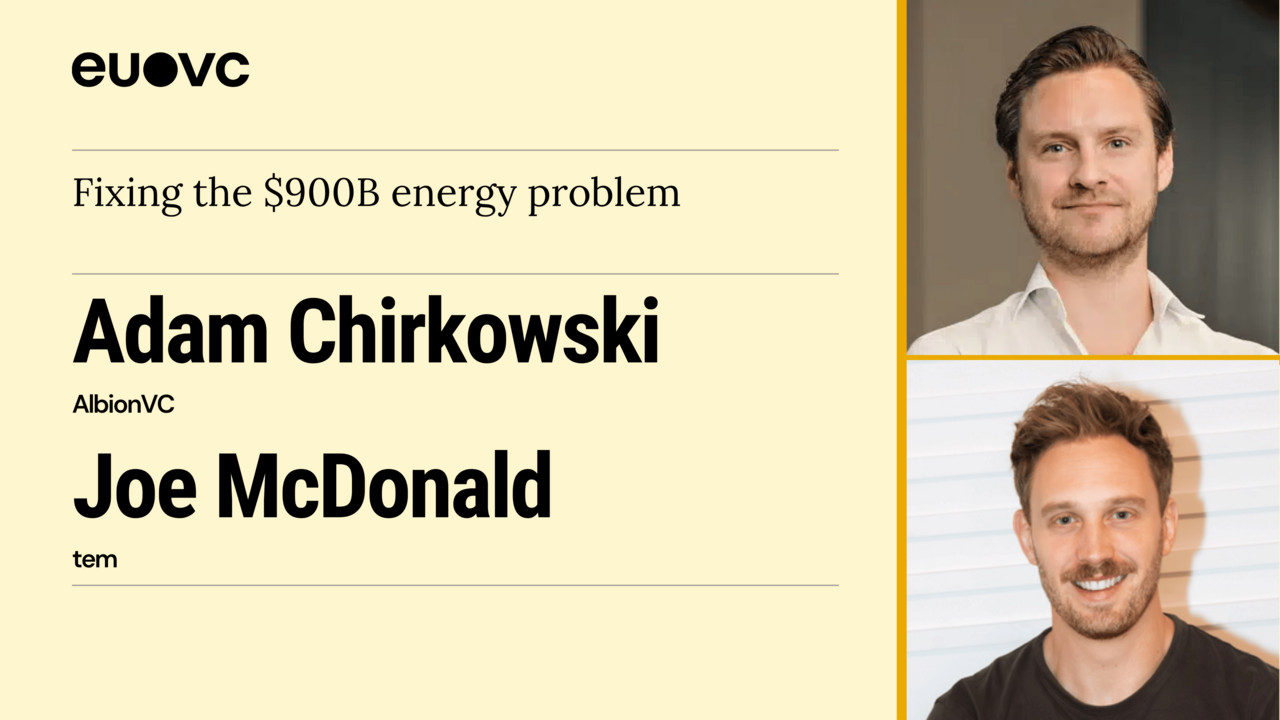
At EUVC Summit 2026, Joe McDonald, CEO and Co-Founder of tem, joined Adam Chirkowski, Partner at AlbionVC, to discuss how tem is rebuilding energy transactions, why established utilities struggle to change and how Europe could produce a new generation of global energy companies.
The cost of compute starts with the electron
“The cost of the electron was redefining the new world order.”
The performance of an AI model depends partly on how much compute a company can access. Compute requires data centres and data centres require electricity. Joe’s conclusion is direct: energy costs increasingly shape a country’s capacity to compete in AI, defence, health technology and manufacturing.
Subsidising electricity may provide short-term relief, but Joe warns that it can transfer the cost of AI infrastructure to households and other businesses. A more durable advantage comes from improving the energy system itself.
The missing pillar is the transaction layer
Joe divides the challenge into three parts: generating electricity more cheaply, improving the infrastructure that moves and stores it and reducing the cost of buying and selling it.
The third pillar receives less attention. According to Joe, transaction fees account for close to 25% of the market today, with five or six intermediaries sometimes sitting between buyer and seller.
Electricity is increasingly traded through data rather than the physical movement of commodities. That creates an opportunity to reconcile information, discover prices and match buyers with generators more efficiently. tem is pursuing that opportunity through AI-driven algorithms and infrastructure designed to attract liquidity away from traditional wholesale markets and utilities.
“The more we grow, the more defensible it gets.”
For Joe, that defensibility must appear in the price. As tem’s network gains liquidity and its algorithms gain intelligence, customers should receive better pricing. Growth then strengthens the underlying advantage rather than simply adding volume.
Complexity can protect the challenger
Energy’s intricate workflows, pricing structures and risk requirements make the sector difficult for horizontal AI companies to enter. Incumbents face a different constraint: adopting a new transaction model could cannibalise their existing revenue.
Joe said tem offered its infrastructure to 20 of the UK’s 35 utilities around two years earlier. All declined. Their response illustrated the innovator’s dilemma at the heart of the market.
tem has used its own neo-utility as proof that another operating model is possible. Joe said it manages about 5,000 businesses with five people, compared with roughly 220 people at an average UK utility. The company now wants to enable many more organisations, from neobanks to councils, to build customer applications on top of its infrastructure.
Europe’s complexity could become an export advantage
Joe believes the UK energy market is highly competitive, unusually complex and several years ahead of many other markets. Around 122 markets globally are moving towards a similar structure, he said.
“If you can get it right here and you have the ambition and the aggression for scale, I actually do think you’re going to see a couple of generational companies be born from here.”
The fintech parallel matters. The UK’s complicated financial system helped produce infrastructure businesses that could travel. Joe sees the same possibility in energy, provided European companies turn local complexity into repeatable global infrastructure.
The transaction-layer test
For founders and investors assessing an energy company, four questions sharpen the opportunity:
Which cost does it reduce: generation, infrastructure or transactions?
Do customer savings improve as liquidity and usage grow?
Can incumbents adopt the model without undermining their existing revenue?
Does solving a complex European market create an advantage that can travel?
Listen to the full conversation on Spotify to hear how Joe plans to take tem’s transaction infrastructure from the UK into markets including Texas and Australia.