A family business can bring more than capital to venture investing. Its strongest advantage comes from current operating knowledge: direct exposure to customers, supply chains, technical challenges and changing market requirements.
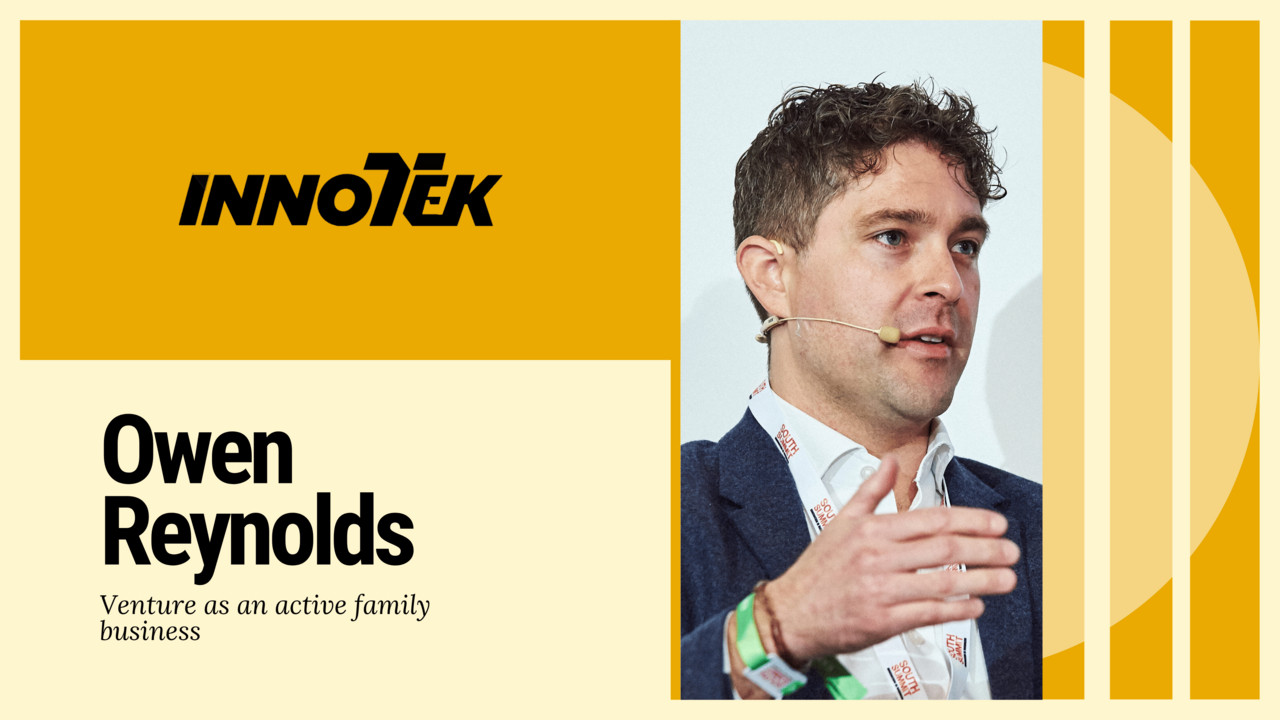
In this conversation from EUVC Summit 2026, Owen Reynolds, Investment Director VC at Innotek, explains how active family businesses can use that knowledge to improve investment decisions.
Innotek is a single family office investing across venture capital, private equity and direct investments, with roots in industry, manufacturing and technology.
Operating knowledge can accelerate diligence
An operating business may already understand the problem a startup is trying to solve. That allows its investment team to spend less time learning the market and more time assessing the company.
“We don’t need to be told the market, we don’t need to be told what the problem is. We just need to go straight to the unit economics, the build, the competitive advantage.”
Owen says this familiarity often allows him to skip the first five slides of a relevant pitch deck. A research process that might take another investor much longer can sometimes be completed within a few days.
In robotics, for example, Innotek can draw on 20 robotics engineers and 100 IT professionals within the family’s corporate operations. When an opportunity relates to technology the organisation already uses, studies or considers buying, those specialists can provide detailed input.
The scope of that support has to remain clear. Innotek can move quickly on specific technical questions within its experience. When the necessary knowledge is not available internally, the team says so.
Active operators receive information investors may miss
Sector specialists often enter venture capital with deep industry expertise. Owen has observed that some lose part of that advantage as they become professional investors and spend less time working inside the market.
An active family business remains close to customers, suppliers and operational problems. Its knowledge continues to develop through daily exposure rather than relying only on external research or an established investment thesis.
“You hear the whispers, you know what your customers are looking for, you know what they’re telling you is around the corner.”
This experience also helps Innotek interpret what is happening inside portfolio companies. Its familiarity with hardware businesses provides context on financial performance, supply-chain problems and the operating patterns associated with progress.
The family office can compare notes with a board and explain whether a particular difficulty resembles something it has seen before. That context can help investors distinguish a familiar operating challenge from a more serious warning.
Effective support starts with specific expectations
The potential contribution of a family office should not be assumed. Owen advises VCs and companies to ask directly where the family’s expertise might apply.
Innotek tries to explain what it can do, what it cannot do and where its support may become relevant. Owen describes this as creating “option value”: the relationship gives a VC or portfolio company access to additional expertise when a suitable situation arises.
Responsiveness matters too. When a company or VC makes a specific request, Owen argues that it is usually important. If the family office responds too slowly, they may not ask again.
The same transparency should extend to co-investment. GPs should understand whether a prospective LP is genuinely likely to invest directly, what it could contribute and how far it has progressed in its decision.
Questions for family businesses investing in venture
Before promising operating value, a family business should ask:
Which technologies, customers or supply chains do we understand through current operations?
Where can our team conduct faster or deeper diligence?
Which portfolio challenges can our specialists credibly help address?
How quickly can we respond when a GP or founder asks for support?
Are our fund expectations helping managers act or slowing them down?
That final question also applies to fund design. Owen argues that LPs can be slow to accept structural innovation, pointing to established expectations around fund economics and restrictions on pre-emptive investments. These constraints can prevent managers from acting on knowledge developed through their portfolio relationships.
Family businesses can become better venture partners by defining where their experience is genuinely relevant, setting clear expectations and responding quickly when that expertise is needed. They can also question structures that prevent VCs from acting at the right moment.
Listen to the full EUVC Summit conversation on Spotify to assess how your organisation’s operating experience could improve diligence, portfolio support and fund relationships.