Europe’s deep tech breakthroughs often face their hardest test between successful science and global scale, when manufacturing, commercialisation and adoption risks come into view.
Ruya Ventures is building its fund around that gap, treating those capabilities as part of the investment strategy rather than an add-on. For LPs and fund managers evaluating deep tech strategies, its model raises a practical question: should the capabilities that determine whether a company scales sit at the centre of fund design?
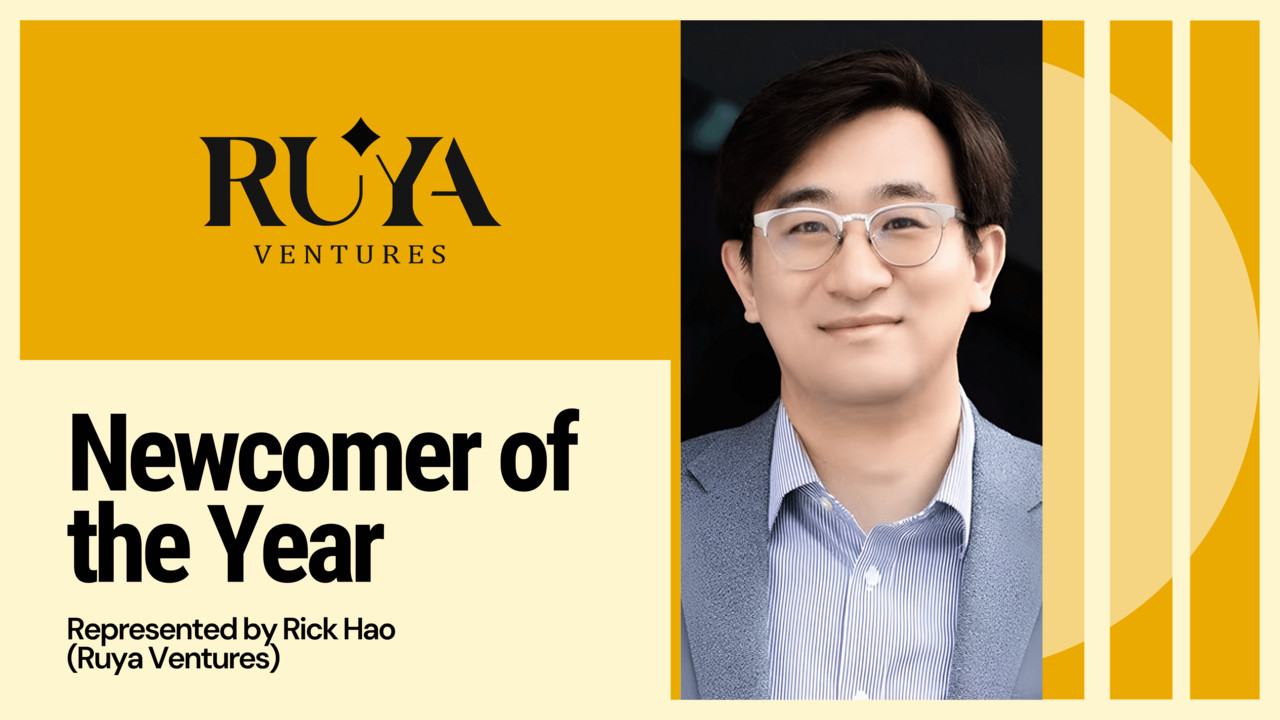
At the EUVC Summit & Awards Show 2026, we named Ruya Newcomer of the Year for rethinking how capital-intensive European deep-tech companies can scale faster, compete globally and do so with less capital. Founder and Managing Partner Rick Hao explained Ruya’s approach to scaling European deep tech.
Ruya turns working technology into scalable products
Ruya backs pre-seed and seed-stage deep tech companies across Europe and the UK. It focuses on value chains where Rick has developed strong conviction, including battery technology, semiconductors, robotics and AI.
The firm launched in October 2025 and closed its oversubscribed $50 million debut fund in less than a year. By July 2026, it had invested in five companies across its core sectors.
Ruya targets the gap between a working technology and a product that can reach production and adoption.
Commercialisation, manufacturing strategy and international networks are therefore not optional portfolio services. They shape how Ruya selects companies, constructs its portfolio and supports each investment.
Combining technical depth with fund-building experience
Rick has invested in deep tech for more than a decade, including periods when hardware timelines and capital requirements made the category unattractive to many investors.
Before founding Ruya, he was a Partner at Speedinvest, where he built and led the deep tech practice, made more than 30 investments and managed the firm’s thesis across fields including AI, quantum technologies, materials science, semiconductors, robotics, batteries and fusion. Earlier, at IQ Capital, he developed his approach inside a specialist deep tech fund.
Those experiences showed him the technical depth of specialist investing and the portfolio construction, asset allocation and fund management capabilities of a generalist platform. Ruya combines both.
“For deep tech investment, you really need a very highly focused investment thesis and a dedicated strategy.”
Rick also holds a Master of Computer Science from the University of Edinburgh and an MBA from Imperial College Business School. That combination of technical and commercial training underpins Ruya’s focus on scientific breakthroughs that solve practical problems.

Concentration makes deeper support possible
Ruya intends to work with a small, concentrated portfolio rather than spread capital across many companies.
“We want to go as early as possible,” Rick said, often as “the first institutional investors” in a company. Entering early allows Ruya to address scaling constraints before they become structural.
That support extends beyond Europe. As he puts it:
“Deep tech is a global play.”
A company may develop its technology in Europe while relying on suppliers, manufacturing capacity or customers elsewhere. Ruya is therefore building a global network with particular supply chain expertise in Southeast Asia.
The relevant measure is not the size of that network, but whether it can help answer specific questions: where a product can be manufactured, which suppliers can support the next stage and which markets can sustain early commercial volume.
Portfolio test: Does the construction of the fund make its promised level of support possible?
The bottleneck can reveal the opportunity
Battery technology illustrates Ruya’s strategy.
Following a difficult period for Europe’s battery industry, the sector has become less attractive to many deep tech and later-stage investors. Rick sees that retreat as a potential opportunity when paired with a different approach to manufacturing and scale.
Ruya’s first investment was a European battery manufacturing startup. At the time of the conversation, Rick said the company was performing strongly and was on track to reach double-digit millions in revenue within the following months.
The argument is not that every unfashionable sector is mispriced. An opportunity exists when the fund understands why previous approaches struggled and has a credible strategy for addressing the underlying constraint.
This complements EUVC’s examination of why climate hardware startups need a different funding playbook.
Pressure-test a specialist deep tech fund
Ruya’s model suggests four questions for investors and LPs:
Does the thesis identify a structural bottleneck, or only an attractive technology category?
Where does the team have enough value-chain expertise to make different decisions?
Does portfolio size match the depth of support being promised?
Can the network shorten the path to manufacturing, revenue and international scale?
The Newcomer of the Year award recognised Ruya’s early progress. The long-term test is whether its focused thesis, concentrated portfolio and global network can help European deep tech companies cross the gap between scientific breakthrough and commercial scale.
That gap is not adjacent to the investment case. It is where much of the value sits.
Hear Rick explain Ruya’s deep tech strategy
Listen to the full conversation for Rick’s approach to fund design, hardware scaling and overlooked investment opportunities.