An outlier investment should change more than a fund’s returns. It should raise the standard applied to every investment that follows.
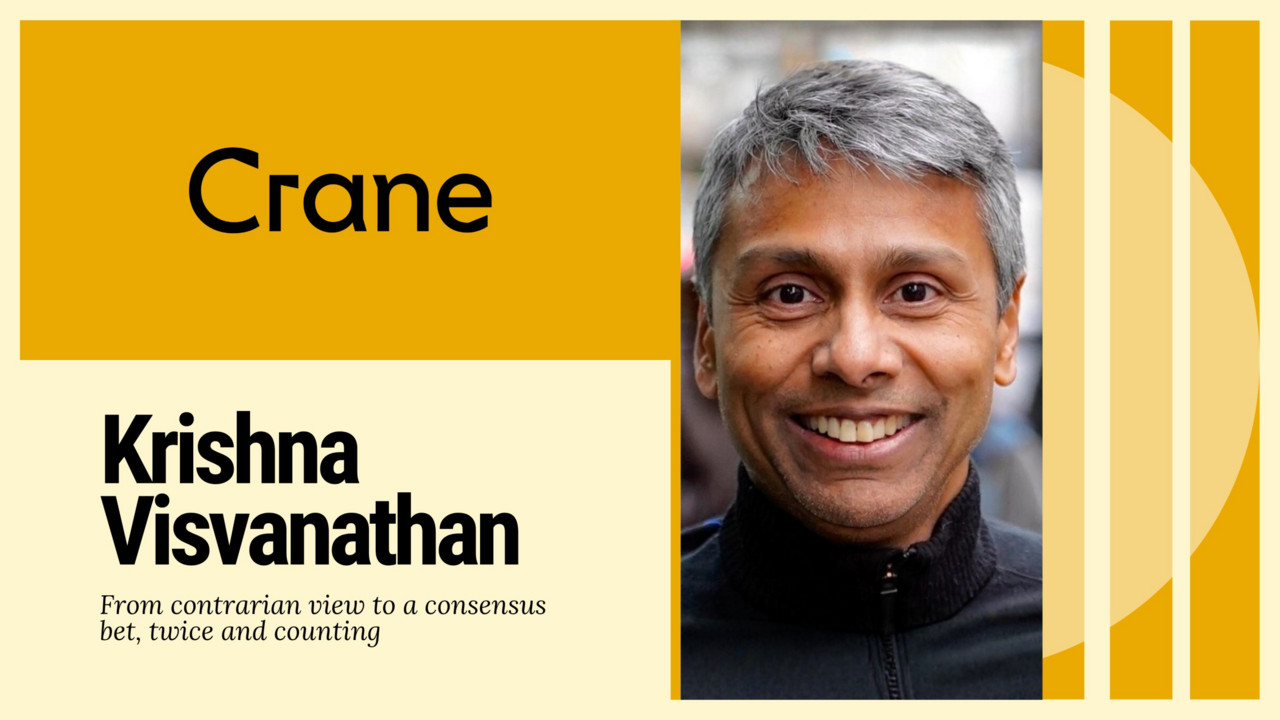
During a conversation at the EUVC Summit, Krishna Visvanathan, Co-Founder and Partner at Crane Venture Partners, described the standard Crane now applies: “Our desire is to try to imagine any investment we make returning half the fund or the whole fund.”
Power-law outcomes mean this will not happen across an entire portfolio. But Crane starts every investment with that possibility. It does not reserve its greatest ambition for a small group of moonshots while filling the rest of the portfolio with safer bets.
For Crane, it started with James
That higher standard began taking shape when Krishna met James Dacombe in 2019. James was 19 and pitching the technology that became CoMind: a non-invasive sensor for the brain, inspired by two grandparents who had experienced dementia.
Krishna could not yet determine whether the product was buildable. He could see something exceptional in the founder.
“I knew James would be successful at some point, and I felt that we had to be with him from the beginning.”
Crane co-led James’s first round with LocalGlobe. Five years later, it became the only institutional investor in the first round of his second company, initially called Flux and now OLIX.
The experience sharpened Crane’s early-stage test. The firm still assesses the idea and the potential market, but it also asks whether the founder can keep learning, attract exceptional people and grow into a far more capable leader.
Do not search for a replica
Success creates its own pattern-matching risk. After backing an exceptional founder, investors may start looking for the same age, background or personality.
Krishna rejects that approach.
“It’s not finding another James. It’s finding another… individual who is able to present a version of the future that… just blows your mind.”
The next outlier will not necessarily resemble the last one. What can repeat is the founder’s ability to expand the investor’s sense of what is possible.
Krishna looks for three signals: humility, self-awareness and maturity. Together, they indicate whether a founder has the capacity to learn, evolve and become “the next best version” of themselves as the company grows.

A practical founder test follows:
Can they describe an ambitious future others do not yet see?
Do they understand where their own expertise ends?
Can they attract specialists who know more than they do?
Will they give those people enough room to do exceptional work?
Look at who chooses to follow
Krishna recalls visiting James’s companies and watching teams of PhDs demonstrate what they had built. James was the least academically qualified person in the room and stood behind the specialists as they explained their work.
Yet one thing remained clear:
“Everyone in that room is there because of the guy standing at the back of the room.”
That may be one of the strongest signals of an outlier founder. They do not need to possess every answer themselves. They need to attract people capable of finding those answers and unite them around an ambition worth pursuing.
Backing CoMind late in Crane’s first fund raised the bar for fund two and beyond, focusing the firm on founders who can make an improbable future feel achievable.
Listen to the full conversation to learn how Crane identifies outlier founders before consensus forms.